
Our practice will be closed on Monday, 8 June. We will reopen on Tuesday, 9 June.
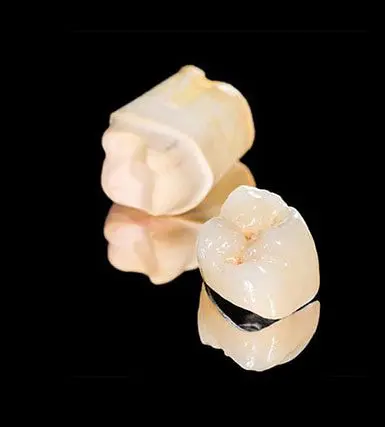
Ceramic inlays and onlays are used when a back tooth (a premolar or molar) has lost a substantial part of its structure, either to decay or to trauma which has caused a large part of it to chip or crumble away. When this happens a conventional white filling made from composite resin will not be strong enough to mend the tooth.
An inlay will mend a cavity in the centre of the chewing surface of a back tooth, whereas an onlay will mend a cavity in the central part of the tooth, as well as damage affecting one or more of the cusps.
The cusps of the tooth are the raised points located on the outer and inner edges of the tooth.
Our Greensborough dentist will prepare your tooth, removing any damaged or decayed areas.
Next, an impression is taken of the tooth and sent to the dental laboratory who will fabricate it according to our prescription.
Finally, the inlay or onlay will be fitted and bonded in place.
Call our friendly Banyule dental team on (03) 9435 2966 to make an appointment.

We provide the most comprehensive range of dental services in the Greensborough area
Ceramic inlays and onlays are advanced dental restorations designed to repair significant damage to back teeth, such as molars and premolars. They are an excellent alternative to traditional fillings when a tooth has lost substantial structure due to decay or trauma, like chipping or crumbling. These restorations offer a durable and aesthetically pleasing solution to protect and rebuild the compromised tooth.
An inlay is specifically crafted to fit into the central portion of a tooth's chewing surface, addressing cavities or damage within this area. An onlay, on the other hand, is more extensive; it not only covers the central part of the tooth but also extends to protect and restore one or more of the tooth's cusps, which are the pointed projections on the chewing surface.
The process of receiving a ceramic inlay or onlay typically involves several key steps to ensure a precise and effective restoration. It begins with preparing the damaged tooth, which includes removing decay and shaping the tooth to accommodate the restoration. Following preparation, an accurate impression is taken of the prepared tooth and surrounding teeth, which is crucial for the laboratory to fabricate a perfectly fitting inlay or onlay.
Once the impression is sent to a dental laboratory, skilled technicians create the custom ceramic restoration. During a subsequent appointment, the fabricated inlay or onlay is carefully fitted and bonded to the prepared tooth using strong dental adhesives. This meticulous procedure ensures the restoration is both functional and aesthetically integrated with the rest of your smile, providing long-lasting protection and restoring the tooth's original form and function.